What Is UNNF Crypto? Is it Legit or a Scam?
 Written by Fiona FLast updated:
 The crypto market has always been driven by narratives. Some narratives revolve around artificial intelligence, others around real-world assets (RWA), and occasionally, micro-cap tokens appear that combine geopolitical themes with heavy speculative hype.
UNNF Crypto is one of those projects catching social media attention in 2026. While its promoters describe it as a blockchain-based, energy-themed token linked to strategic resource management, deep-dive blockchain data suggests it remains a highly speculative, low-liquidity asset.
If you’ve seen UNNF trending on Solana DEX trackers or crypto forums, this objective review will break down the mechanics, the risks, and the reality behind the hype.
What Is UNNF Crypto?
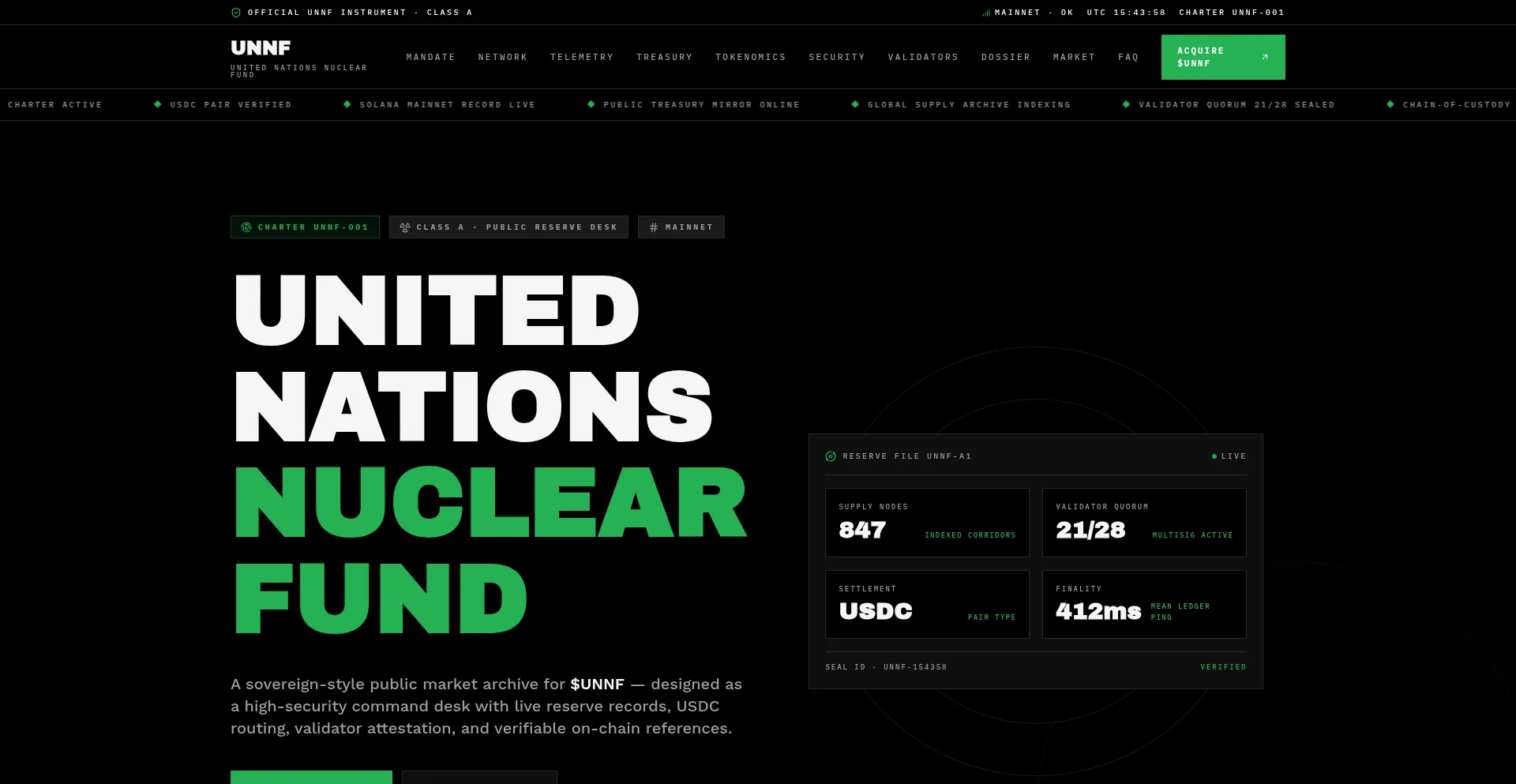
UNNF stands for “United Nations Nuclear Fund.” Despite the official-sounding name, it is a meme-style SPL token built on the Solana blockchain that leverages a strategic energy narrative.
According to its marketing materials, the project positions itself as a digital asset themed around global energy security and strategic reserves. However, it is crucial to understand that UNNF has zero official affiliation with the United Nations or any physical nuclear energy infrastructure.
It does not grant holders ownership rights over real-world commodities or energy plants. For retail traders, UNNF should be treated strictly as a speculative “story trade” rather than a verified, utility-backed cryptocurrency.
How Does UNNF Crypto Work?
On a technical level, UNNF operates like most standard tokens on the Solana network. The developers claim that the total supply is capped and that the mint authority has been revoked to prevent future token dilution.
There is no proprietary technology or revolutionary consensus mechanism behind UNNF. Instead, its price action is entirely sustained by:
-
High-volatility speculation
-
Social media shilling and community coordination
-
The “Strategic Reserve” narrative
-
Low market capitalization, making it susceptible to pump-and-dump dynamics
In decentralized finance (DeFi), capital frequently flows into low-cap tokens based on trending news. When the hype fades, early creators and whales often exit, leaving late buyers with illiquid tokens.
UNNF Tokenomics and Market Data
Public on-chain data reveals that UNNF is a micro-cap token with highly concentrated liquidity.
Before putting any capital into narrative-driven assets, you must check these metrics on platforms like Dexscreener or DEXTools:
-
Liquidity Depth: UNNF has thin liquidity compared to major layer-1 assets. This means large sell orders can trigger a price collapse.
-
Holder Concentration: A significant percentage of the supply is often held by early deployers or insider wallets.
-
Exchange Availability: UNNF is primarily traded on automated market makers (AMMs) like Raydium or Jupiter. It is not listed on major, regulated centralized exchanges.
For high-risk tokens like UNNF, trading volume and liquidity matter far more than paper market cap. If the liquidity pool is unlocked or unverified, the risk of a “rug pull” increases exponentially.
Why Are Traders Interested in UNNF in 2026?
Traders looking at UNNF are not investing in the future of blockchain infrastructure. They are speculating on short-term price momentum.
In 2026, the crypto market is highly fragmented, and “narrative trading” has become a popular strategy for high-risk portfolios. Market participants generally approach UNNF with three distinct mindsets:
-
DeFi Degens & Scalpers: Individuals looking to ride the initial volatility wave and exit within hours or days.
-
Narrative Chasers: Speculators betting that geopolitical or energy headlines will pump the token’s price on social media.
-
High-Risk Capital Allocators: Traders putting small “lottery ticket” amounts into micro-cap tokens, expecting most to go to zero but hoping one hits a massive multiplier.
Is UNNF Crypto Legit?
While the UNNF token technically exists on the Solana blockchain and can be swapped via decentralized exchanges, legitimacy on-chain does not mean it is a safe or viable investment.
Several glaring warning signs surround the project:
-
Misleading Branding: Using names like “United Nations” without authorization is a common tactic to manufacture false credibility.
-
Unverified Security Status: Automated smart contract auditors have flagged certain UNNF-associated pools for lack of transparency and high top-holder concentration.
-
Zero Institutional Backing: No credible venture capital firm or energy enterprise has verified or supported this project.
Therefore, while the token functions mathematically on the blockchain, its underlying value proposition relies entirely on finding a “greater fool” to buy it at a higher price.
Could UNNF Be a Scam?
While there is no definitive regulatory ruling labeling UNNF an outright fraud, it carries all the hallmark risks of a crypto exit scam or a short-lived hype cycle.
Many speculative tokens use aggressive marketing to trigger FOMO (Fear of Missing Out) among beginners. If a project cannot prove audited utility, real-world partnerships, or locked liquidity, the probability of retail investors losing their capital is extremely high.
A fundamental rule of crypto risk management: If a token’s marketing relies heavily on emotional geopolitical themes rather than clear utility, proceed with extreme caution. Never invest capital you cannot afford to lose entirely.
How to Trade UNNF Safely
If you choose to navigate high-risk narrative assets, your priority must shift from “maximizing returns” to “mitigating catastrophic security risks.”
First, it is important to note that UNNF cannot be traded on BTCC. To protect global users from market manipulation, smart contract exploits, and sudden rug pulls, secure centralized exchanges like BTCC enforce strict vetting processes and do not support unlisted, low-liquidity DEX tokens.
For traders looking to build a sustainable crypto portfolio without falling victim to micro-cap traps, a professional risk-management setup typically involves:
-
Separating Venture Capital from Core Trading: Professional traders rarely risk their main capital on unverified DeFi pools. They keep their core trading environment siloed on established infrastructure.
-
Leveraging Robust Trading Infrastructure: Instead of exposing Web3 wallets to malicious smart contracts on decentralized protocols, strategic investors utilize institutional-grade platforms like BTCC to track macroeconomic trends, build clear market watchlists, and trade highly liquid, audited assets.
-
Focusing on Liquid Volatility: For those attracted to the high volatility of the Solana ecosystem, a safer alternative is trading major L1 tokens or established mid-caps via regulated derivatives. Utilizing a secure dashboard, such as the one provided by BTCC, allows traders to apply proper stop-loss orders and leverage controls—tools that are fundamentally missing when trading raw DEX tokens like UNNF.
Advantages and Disadvantages of UNNF
Pros
-
High short-term volatility for experienced DEX scalpers.
-
Low network fees due to the Solana infrastructure.
-
Strong narrative alignment with current geopolitical topics.
Cons
-
Extreme risk of permanent capital loss and contract vulnerability.
-
Completely unavailable on secure, vetted platforms like BTCC.
-
High wallet concentration and unverified smart contract risks.
-
No real-world backing or association with official global entities.
Conclusion: Is UNNF Worth Watching?
UNNF Crypto falls into the highest-risk tier of the decentralized finance ecosystem. It is a pure narrative play leveraging a provocative name to capture retail liquidity.
For beginners, the most rational decision is to avoid the asset entirely. The lack of verified transparency, missing exchange support, and misleading branding make it a gamble rather than an investment.
Instead of chasing unlisted micro-caps that carry heavy security warnings, look to build your trading strategies around liquid assets with verifiable market structures.
🔥 Open Your Secure Account Now & Claim Your 30,000 USDT Reward