How to Choose a Crypto Futures Trading Platform in 2026 (Leverage, Fees, and Risk Compared)


Crypto futures trading allows investors to speculate on the future price of cryptocurrencies without directly owning the underlying assets. As the digital asset derivatives market continues to mature, traders are increasingly paying attention to the infrastructure that powers these platforms rather than focusing only on price movements.
In 2026, the landscape of crypto futures trading platforms has evolved significantly. Modern derivatives exchanges now provide advanced order execution engines, improved risk management frameworks, and tools that allow traders to operate in highly volatile environments. Rather than looking only for simple buy-and-sell functionality, traders increasingly evaluate platforms based on leverage options, liquidation protection systems, fee structures, and trading efficiency.
Choosing the right crypto futures trading platform can significantly impact both profitability and capital protection. Exchanges with poor liquidity or slow execution engines may cause slippage during volatile market conditions. At the same time, platforms lacking robust liquidation mechanisms can expose traders to unnecessary risk.
Because of this, traders often evaluate technical infrastructure alongside market analysis when selecting a platform
The Crypto Futures Market in 2026
Crypto futures have become one of the most active segments of the digital asset market. Instead of simply purchasing cryptocurrencies and waiting for price appreciation, traders increasingly use derivatives contracts to speculate on price movements, leveraging and employing hedging strategies.
The expansion of crypto futures trading has been driven by deeper liquidity across major digital assets, improved derivatives infrastructure, and the emergence of exchanges specifically designed for high-volume trading. As a result, traders now evaluate crypto futures trading platforms based on factors such as leverage availability, liquidation protection, execution speed, and simulated trading environments.
Platforms that offer strong derivatives infrastructure tend to provide better tools for managing volatility and capital risk, which is why selecting the right crypto futures exchange is a crucial decision for both new and experienced traders.
What Is a Crypto Futures Trading Platform?

A crypto futures trading platform is a digital exchange that facilitates the buying and selling of crypto futures contracts on cryptocurrencies.
Unlike spot trading, where cryptocurrencies are exchanged instantly, futures trading allows traders to agree on a price for an asset to be settled at a later date.
The most commonly traded derivatives instruments are perpetual futures contracts. These contracts do not have an expiration date, allowing traders to hold positions indefinitely as long as margin requirements are maintained.
Futures platforms also enable margin trading, allowing traders to borrow capital to increase their position size and gain greater exposure to price movements.
Traders who want a deeper walkthrough of derivatives mechanics can explore a guide explaining how to trade crypto futures before entering leveraged positions.
A long position profits when the price of the asset rises, while a short position profits when prices decline. This ability to profit from both upward and downward market movements is one of the main reasons crypto futures trading has grown rapidly in popularity.
However, leveraged trading also introduces the risk of liquidation. If market movements push a position below the required margin threshold, the platform will automatically close the position to prevent further losses.
Because of this mechanism, reliable liquidation systems and risk management tools are critical features of any crypto futures trading platform.
Key Factors to Compare in Crypto Futures Trading Platforms
Leverage allows traders to control large contract positions with relatively small amounts of margin.

For example, 100x leverage means that $1 of margin can control $100 worth of futures contracts. This dramatically increases capital efficiency but also raises the risk of liquidation.
Some crypto futures trading platforms offer leverage levels up to 500x on select perpetual contracts. For example, traders exploring crypto futures trading on BTCC can access leverage levels up to 500x on certain markets.
BTCC offers leverage of up to 500x on select perpetual contracts, positioning it among the highest leverage crypto futures trading platforms currently available. Such leverage environments are typically used by experienced derivatives traders who operate under strict risk-management parameters.
Futures Trading Fees (Maker vs Taker)
Crypto futures trading fees are typically divided into maker and taker fees.
Maker orders add liquidity to the order book by placing limit orders that other traders can execute against. Taker orders remove liquidity by executing immediately against existing orders.
Across the industry, futures trading fees generally range between 0.02 percent and 0.06 percent per trade.
For traders executing large volumes or high-frequency strategies, even small differences in trading fees can significantly affect long-term profitability.
Because of this, many exchanges offer tiered fee structures that reduce costs for users with higher trading volumes.
Contract Types Available
Different trading strategies often require different derivative structures.
The most common contract type in modern crypto derivatives markets is the USDT-margined perpetual future, where profits and losses are settled in stablecoins such as USDT or USDC.
Some platforms also offer coin-margined contracts, where profits and losses are settled in the underlying cryptocurrency itself.
Other exchanges offer delivery futures contracts that settle at predetermined expiration dates.
Understanding these contract types helps traders determine which exchange best matches their trading strategy.
Margin Modes (Cross vs Isolated)

Margin modes control how collateral is distributed across trading positions.
Cross margin uses the entire account balance to support open positions. This approach can prevent liquidation during short-term volatility but exposes the entire account to potential losses.
An isolated margin assigns a specific amount of capital to a single position. If that position is liquidated, only the assigned collateral is lost, leaving the rest of the account balance intact.
Some derivatives platforms also offer portfolio margin, where the system calculates risk based on the total exposure of the trader’s positions.
Insurance Funds and Liquidation Protection
When positions are liquidated, exchanges attempt to close them above the bankruptcy price. If the liquidation price exceeds expectations, the surplus funds are transferred to the exchange’s insurance fund.
These funds help protect the market during extreme volatility events by covering losses that would otherwise affect other traders.
Major derivatives exchanges maintain publicly disclosed insurance funds to strengthen user confidence. For example, Binance publishes real-time insurance fund data with assets exceeding one billion dollars.
Some exchanges have also introduced mechanisms designed to prevent clawbacks during liquidation events.
BTCC, for example, maintains a zero-clawback policy, meaning negative balances are covered by the exchange rather than redistributed to profitable traders.
Demo Futures Trading Availability

Derivatives trading carries significant risk, particularly for new traders.
For this reason, many platforms provide simulated trading environments where users can practice strategies using virtual funds.
Traders new to derivatives markets may benefit from starting with a beginner’s guide to crypto futures before opening leveraged positions.
Demo trading environments typically mirror real market conditions and allow traders to test strategies, learn platform mechanics, and experiment with risk management tools.
BTCC provides a full simulated trading environment that enables traders to practice futures strategies before deploying real capital.
Feature Comparison: Typical Futures Platform Specifications
The following table outlines some of the standard features of crypto futures trading platforms in 2026, helping traders identify which specifications align with their requirements and expectations.
| Feature | Why It Matters | Typical Market Range |
| Maximum leverage | Capital efficiency | 50x–500x |
| Futures taker fee | Execution cost | 0.04%–0.06% |
| Margin modes | Risk management flexibility | Cross and isolated |
| Demo trading | Risk-free strategy testing | Available on select platforms |
| Insurance fund | Protection during liquidation events | Publicly disclosed on major exchanges |
BTCC Futures Trading Overview
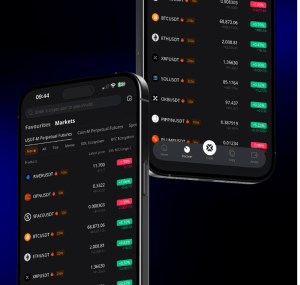
Founded in 2011, BTCC is one of the longest-operating exchanges in the cryptocurrency industry. The platform has developed a strong focus on derivatives trading infrastructure and has maintained a continuous presence throughout multiple market cycles.
Longevity in derivatives markets often reflects repeated stress-testing of liquidation engines, insurance fund solvency, and margin management systems across periods of extreme volatility.
Exchanges that have survived multiple bull and bear markets typically refine their trading infrastructure over time, reducing systemic fragility.
BTCC offers leverage of up to 500x on select perpetual futures contracts, positioning it among the highest leverage crypto futures trading platforms currently available.
To support different trading strategies, the platform offers both cross-margin and isolated-margin modes, allowing traders to adjust risk exposure according to their approach to the market.
BTCC also provides a simulated futures trading environment where traders can test strategies with virtual funds before committing real capital.
How to Decide Which Crypto Futures Platform Is Right for You
Selecting the right crypto futures platform ultimately depends on a trader’s strategy and risk tolerance.
High-leverage traders typically prioritize platforms offering maximum leverage and deep liquidity.
Scalpers and high-frequency traders often focus on fee structures and maker rebates, as small differences can accumulate across thousands of trades.
Beginners may prefer platforms that provide educational resources, intuitive trading interfaces, and unrestricted demo trading environments.
Professional derivatives traders often require advanced order types, API connectivity, and transparent reporting of insurance funds.
Matching a platform’s strengths to your trading profile is one of the most effective ways to optimize your trading environment.