


Brent Nears $100 as Houthis Strike Saudi Energy Facilities Inland
 wallstreetcn
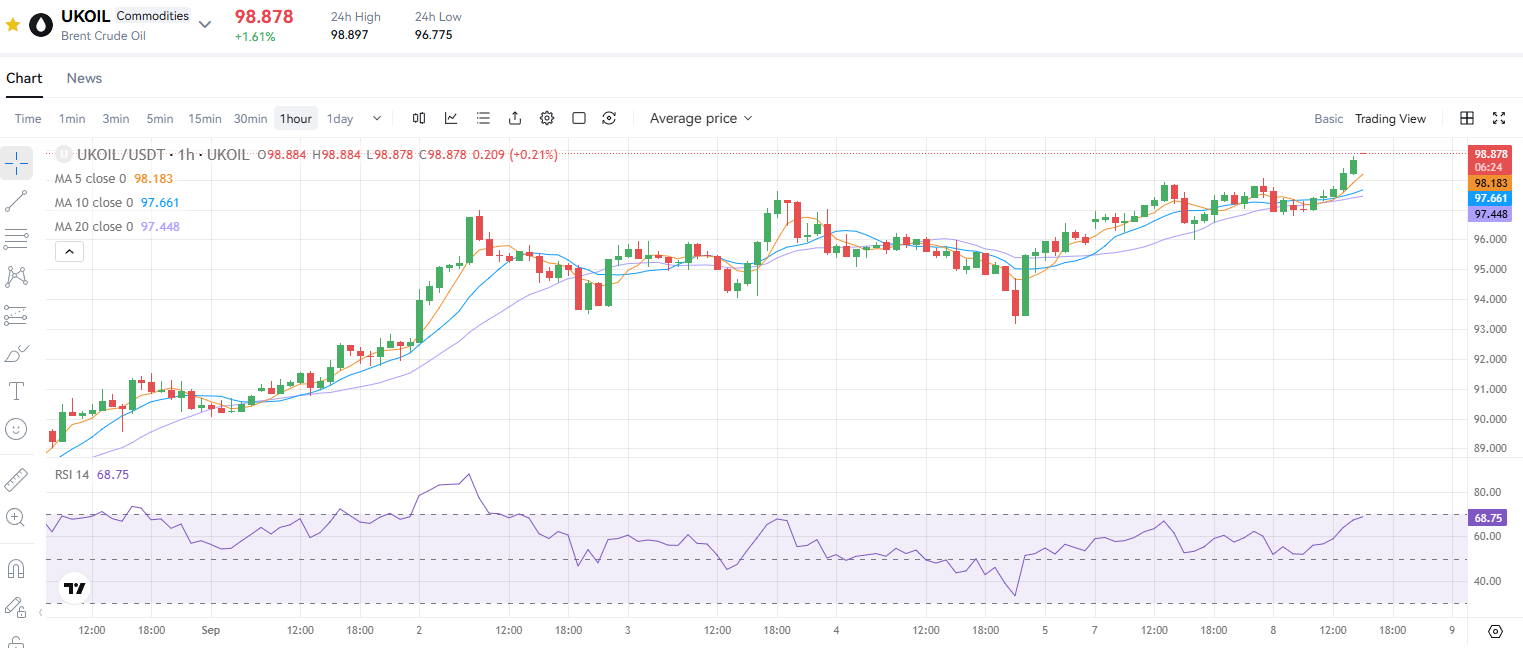
Tensions in the Middle East have escalated again, posing a severe threat to the security of Saudi Arabia's energy supply. Yemen's Houthi forces launched attacks on multiple cities in southern Saudi Arabia on Sept. 8, setting fire to several energy facilities and forcing some operations to halt. International oil prices surged immediately, with Brent crude approaching the $100 mark.
Saudi Arabia's Ministry of Energy confirmed that civilian and economic facilities in Abha, Khamis Mushait, Najran, and Jizan were attacked, injuring more than 70 people. Relevant authorities are working to ensure the safety of facilities and continuity of operations. A Houthi spokesman said the same day that the group would announce a broad military operation deep inside Saudi territory.
The attack news quickly rippled through the oil market. Brent crude rose 1.61% intraday to $98.87 a barrel, approaching the $100 mark; WTI crude rose 2% to $93.31 a barrel.
Multiple Cities Hit Simultaneously, Operations Disrupted
According to the Saudi Press Agency, citing an unnamed official from the Ministry of Energy, the Sept. 8 attacks caused fires at several energy and utility facilities in southern Saudi Arabia, temporarily disrupting operations. The Ministry of Energy said it is making every effort to ensure facility safety, personnel safety, and operational continuity. The Ministry of Energy and Saudi Aramco did not immediately respond to Bloomberg's inquiries.
The Saudi-led coalition in Yemen said in a statement that the Houthi attacks affected Abha, Khamis Mushait, Najran, and Jizan, injuring 73 civilians and residents. The coalition said it would respond "firmly" to the Houthi attacks.
Houthis Announce Expanded Inland Strikes
Houthi spokesman Yahya Saree said in a statement on Sept. 8 that the group would soon launch a broad military operation deep inside Saudi territory, marking a significant escalation in the conflict's intensity.
According to earlier reports, the Houthis launched a ballistic missile attack on Sept. 7 against a Saudi truck convoy transporting military supplies to areas controlled by Yemen's government forces, claiming to have used a missile developed by the group. Saree warned on social media the same day that Saudi Arabia's increased airstrikes and reconnaissance against the Houthis and its provision of weapons to Yemeni government forces meant Saudi military actions "will not go unanswered."
According to Houthi reports, Saudi Arabia airstruck a prison in Hazm, the capital of Al Jawf Governorate in northern Yemen, on Sept. 7, killing seven and injuring seven, with some women and children among the casualties. Saudi Arabia had not responded as of press time.
Jizan Refinery Previously Hit Hard
This is not the first time the Houthis have struck Saudi energy facilities. According to Bloomberg, in July alone, the Houthis announced an attack on the Jizan refining complex, which has halted production at the 400,000-barrel-per-day refinery since July. Last month, the Houthis carried out two attacks on Jizan refining facilities within a week, one causing a fire and the other damaging a fuel storage tank at the plant.
After declaring a maritime blockade on Saudi Arabia on July 20, the Houthis have repeatedly attacked Saudi oil tankers in the Red Sea and Gulf of Aden, and continued to strike energy facilities inside Saudi Arabia with missiles and drones. The Saudi-led coalition has also continued to strike Houthi military targets, with the conflict spiraling upward.
This attack will further deepen oil market concerns about supply disruptions. Crude shipments through the Strait of Hormuz remain constrained by US-Iran tensions, and escalating Middle East geopolitical conflicts are pushing London Brent prices back toward the $100-per-barrel mark.
This content is for informational and educational purposes only and does not constitute investment advice related to BTCC. BTCC makes every effort but cannot guarantee the truthfulness, accuracy, or originality of the content above.